
The “spray is the only way” myth
Spray refinishing became popular because it is fast and easy to scale. It can look great when done properly. The problem is that many low-cost jobs cut corners on preparation and materials, which is why customers end up with peeling, rough overspray, or staining after a short time.
Liquid acrylic is not a “new internet trend”. It has been used internationally for years as a premium option because it can create a thicker, smoother coating that feels more like a new bath surface. The names vary by country: you may see refinishing, reglazing, liquid acrylic or pour-on acrylic.
Where liquid acrylic is commonly offered
You will see acrylic systems used across North America and mainland Europe, and in other markets too. Examples include:
- North America: USA, Canada
- Europe: Many EU countries + mainland Europe (France, Spain, Italy, Netherlands, Belgium, Scandinavia)
- Oceania: Australia, New Zealand
(Different brands and systems exist, but the idea is the same: a self-levelling acrylic coating rather than a thin sprayed enamel layer.)
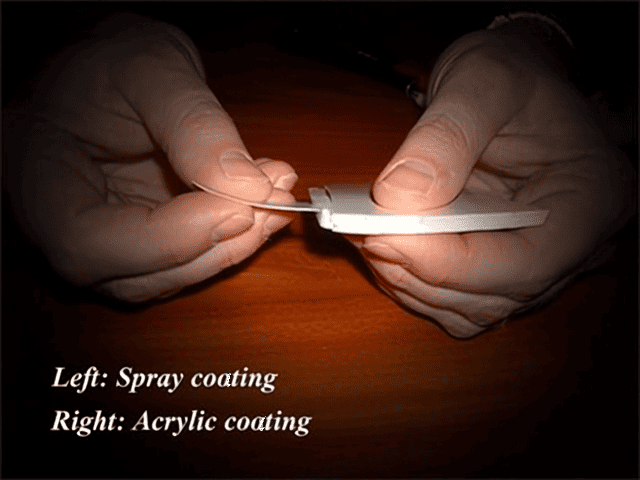
“This illustration shows the difference between a spray finish and a liquid acrylic coating. On the left you can see a thinner spray layer; on the right is a thicker acrylic coating. That extra thickness can offer better protection in day-to-day use, because it’s generally harder to scratch right through the coating to the surface underneath.”
What actually matters (not marketing)
Preparation
Degreasing, sanding/keying, repairing chips, and correct masking are what make the coating bond. Poor prep is the #1 reason baths fail early.
Coating thickness
A thicker, self-levelling coating is generally more forgiving and feels closer to a factory surface. Thin coatings can look fine but are easier to scratch and wear.
Overspray & ventilation
Spray work needs strong extraction and careful control. If not, you can end up with rough surfaces, dust in the finish, or paint mist where it shouldn’t be.
Bottom line: both methods can work. But if a company is pushing spray as the only option, it usually means they only offer spray. The best choice depends on your expectations, how the bathroom is used, and how long you want the finish to last.
Acrylic vs Spray – clear comparison
These are practical differences customers actually notice. Results still depend on preparation and correct application.
| Feature | Premium Liquid Acrylic | Standard Liquid Acrylic | Spray Enamel |
|---|---|---|---|
| Typical thickness | Thick, self-levelling layer | Medium thickness | Thin coating |
| Feel & appearance | Very smooth, “new bath” feel | Smooth, good gloss | Can look great, but more sensitive to dust/overspray |
| Expected service life | Often the longest option | Strong long-term value | Best for short-to-mid term budgets |
| Smell & ventilation | Lower odour (still needs ventilation) | Lower odour (still needs ventilation) | Stronger smell; proper extraction is essential |
| Downtime | Usually 24 hours before use (varies) | Usually 24 hours before use (varies) | Often fast turnaround, but cure time still matters |
| Scratch & stain resistance | Excellent with correct care | Very good with correct care | Good, but easier to mark if thin/cheap materials |
| Best for | Long-term homeowners who want the best finish | Most households (best balance of value & performance) | Tight budgets, rentals, or short-term refresh |
Common tricks that lead to bad jobs
Red flags
- “We can do it in 1–2 hours” (real prep takes time).
- No mention of extraction/ventilation for spray jobs.
- Very short guarantee with lots of exclusions.
- They won’t explain what products they use.
- They don’t ask for photos (chips, cracks, rust, material).
Questions to ask before booking
- How will you prepare the surface (degrease, sand/key, repair)?
- What is the expected cure time before the bath can be used?
- How do you protect the bathroom from dust/overspray?
- What aftercare products should I avoid?
Contact
For the fastest quote, send photos on WhatsApp (wide shot + close-ups of any damage + the waste area) and your postcode.